No products in the cart.

Buy .284 Winchester online
Price range: $850.00 through $3,800.00
Buy .284 Winchester online from Ammo Plug. We deliver reliable, discreet access to this powerful short-action 7mm cartridge worldwide with no license required. Enjoy fast 1–2 day overnight shipping in the USA and Canada, or 3–5 days internationally, using plain packaging and full tracking. Choose secure payments via Bitcoin, bank transfer, Zelle, CashApp, or Western Union. Every order includes a 30-day full refund or replacement guarantee and strict privacy protection. From hunting medium to large game with flat-shooting 140–160 grain loads to long-range precision, the .284 Winchester offers exceptional efficiency and performance in compact rifles. Shop confidently with 100% customer satisfaction focus at Ammo Plug.
GET 10% DISCOUNT FOR ORDERS PAID VIA BITCOIN(BTC) OR USDT: USE CODE: “CRYPTO”
125 grains (1000)Rounds
$850.00
125 grains (2000)Rounds
$1,600.00
125 grains (5000)Rounds
$3,600.00
150 grains (1000)Rounds
$900.00
150 grains (2000)Rounds
$1,700.00
150 grains (5000)Rounds
$3,700.00
160 grains (1000)Rounds
$1,000.00
160 grains (2000)Rounds
$1,800.00
160 grains (5000)Rounds
$3,800.00
WE'RE A TEAM OF DEDICATED EXPERTS THAT OPERATE WITH 100% DISCRETION FROM DISCREET PACKAGING TO DELIVERY. THROUGH OUR TRUSTED CONNECTIONS WITH MAJOR CARRIERS, YOUR PACKAGE IS FULLY PROTECTED THROUGHOUT THE SHIPPING PROCESS AND GUARANTEED TO ARRIVE SAFELY EVERY TIME. TO MAINTAIN THIS HIGH LEVEL OF SERVICE AND SECURITY, WE ONLY SHIP THE MINIMUM ORDER QUANTITIES LISTED ABOVE.
Description
Where to buy .284 Winchester Online
We make it simple and secure to get .284 Winchester ammunition without hassle or restrictions.
- We offer a trusted online source for .284 Winchester rounds, focusing on reliability and customer privacy from start to finish.
- Our platform specializes in hard-to-find or specialty calibers like the .284 Winchester, ensuring consistent stock for hunters and shooters.
- Discreet packaging protects your purchase during transit, with no external markings that reveal the contents.
- We ship worldwide, so customers in the USA, Canada, or international locations can order with confidence.
- No license or special permits are required, removing barriers that often complicate ammunition purchases.
- Multiple secure payment options give flexibility without relying on credit cards.
- Every order includes a tracking number so you can monitor progress from dispatch to delivery.
- Our 30-day full refund or replacement policy covers any issues with the product upon arrival.
How to order .284 Winchester Online
Ordering .284 Winchester from us follows a straightforward process designed for speed and ease.
- Browse our selection of .284 Winchester ammunition options to find the bullet weights and types that match your needs.
- Add your chosen products to the cart, reviewing quantities and details before moving forward.
- Proceed to checkout where you enter basic shipping information securely.
- Select one of our manual payment methods such as Bitcoin, bank transfer, Zelle, CashApp, or Western Union.
- Complete payment and wait for our confirmation email verifying receipt and processing.
- Once confirmed, we prepare your order for discreet packing and shipment with a tracking number provided.
- Track your package and expect fast arrival, with any questions handled quickly by our support.
Why choose Ammo Plug
We stand out as the most reliable choice for purchasing .284 Winchester ammunition online.
- We prioritize 100% customer satisfaction with every transaction, backed by responsive support.
- Discreet delivery ensures privacy at every step, from packaging to arrival.
- Our worldwide shipping covers the USA, Canada, and international destinations efficiently.
- Fast delivery options include 1 to 2 days overnight within the USA and Canada.
- International orders arrive in 3 to 5 days on average, depending on location.
- We accept flexible payments including Bitcoin, bank transfer, Zelle, CashApp, and Western Union.
- A strong 30-day refund or replacement policy gives peace of mind on every purchase.
- We maintain strict privacy standards to protect your information and order details.
Shipping Policy
We handle shipping for .284 Winchester ammunition with speed, discretion, and reliability.
- Within the USA and Canada, we provide overnight delivery in 1 to 2 days for most orders.
- International shipping typically takes 3 to 5 days, with tracking provided for monitoring.
- All packages use plain, unmarked packaging to maintain complete discretion.
- Every shipment includes a tracking number sent upon dispatch.
- We aim for 100% customer satisfaction by ensuring timely and secure delivery.
- Orders process quickly after payment confirmation to minimize wait times.
- We cover a wide range of destinations worldwide without unnecessary restrictions.
- In case of any delivery issues, our 30-day policy allows refund or replacement.
Product specification table
| Specification | Details |
|---|---|
| Caliber | .284 Winchester (also known as 7.21x55mm RB) |
| Bullet Diameter | 0.284 inches (7.21 mm) |
| Case Type | Rebated rim, bottlenecked |
| Rim Diameter | 0.473 inches (same as .308 Winchester for compatibility) |
| Base/Body Diameter | 0.500–0.501 inches (larger for increased powder capacity) |
| Case Length | 2.170 inches |
| Overall Cartridge Length | Up to 2.800 inches (designed for short-action rifles) |
| Shoulder Angle | 35 degrees (sharp for efficient powder burn) |
| Primer Type | Large rifle |
| Typical Twist Rate | 1 in 10 inches |
| Common Bullet Weights | 120–160 grains (factory: 125–150 gr; handloads up to 180+ gr possible) |
| Muzzle Velocity Examples | 120 gr: ~2,968–3,200 fps; 140–150 gr: ~2,860–3,000 fps; 160 gr: ~2,680–2,800 fps |
| SAAMI Max Pressure | 56,000 psi |
| C.I.P. Max Pressure | ~63,817 psi |
| Designed For | Short-action rifles (originally Winchester Model 88/100) |
| Primary Use | Medium to big game hunting, long-range target shooting |
Product comparison table
| Feature / Cartridge | .284 Winchester | 7mm-08 Remington | .280 Remington |
|---|---|---|---|
| Action Type | Short action | Short action | Long action |
| Case Capacity (approx.) | Higher (fatter body) | Lower | Similar to .284 but longer case |
| Typical 140 gr Velocity | ~2,900–3,000 fps | ~2,800–2,850 fps | ~2,950–3,050 fps |
| Typical 150–160 gr Handling | Strong (better than 7mm-08) | Good for lighter bullets | Excellent for heavier bullets |
| Availability (ammo/brass) | Limited factory, growing custom | Widely available | Moderately available |
| Best For | Short-action power, efficiency | Easy availability, mild recoil | Heavier bullets, long action |
| Recoil Level | Moderate | Mild | Moderate |
| Long-Range Potential | High (parent of 6.5-284 Norma) | Good | Very good |
Buy .284 Winchester online
The .284 Winchester offers excellent velocity and flat trajectory, making it a favorite for long-range hunting and target shooting. Shooters who buy 284 Winchester online commonly seek other versatile precision calibers. A great match is to buy 6.5 284 Norma online, which builds upon similar case architecture with modern performance advantages.
Many also buy 308 match grade online for a more readily available .30 caliber option with proven accuracy. For extreme long-range needs, customers often buy 338 Lapua match online to complement their .284 loads.
Additional information
| Select Qty | 125 grains (1000)Rounds, 125 grains (2000)Rounds, 125 grains (5000)Rounds, 150 grains (1000)Rounds, 150 grains (2000)Rounds, 150 grains (5000)Rounds, 160 grains (1000)Rounds, 160 grains (2000)Rounds, 160 grains (5000)Rounds |
|---|
Related products
Buy .308 Palma Match online
Buy .308 Palma Match online from Ammo Plug. We deliver premium match-grade .308 Winchester ammunition tailored for long-range precision and Palma competitions, featuring 155-grain high-BC bullets for exceptional consistency at 800–1000 yards. Expect tight velocity spreads, reliable supersonic performance, and superior accuracy from polymer-tipped or HPBT designs. We ensure discreet worldwide shipping with overnight options in the USA and Canada, secure payments via Bitcoin, Zelle, CashApp, bank transfer, or Western Union, plus tracking numbers and our 30-day full refund or replacement guarantee. Experience 100% customer satisfaction with privacy-focused service and no license required for your precision shooting needs.
Price range: $750.00 through $3,200.00Select options This product has multiple variants. The options may be chosen on the product pageBuy .308 Match Grade online
Buy .308 Match Grade online from Ammo Plug for premium precision ammunition engineered for exceptional accuracy in target shooting, long-range practice, and competitive events. We deliver discreetly worldwide with no license required, using fast 1–2 day overnight shipping within the USA and Canada or 3–5 days internationally. Secure payments via Bitcoin, bank transfer, Zelle, CashApp, or Western Union are accepted, with every order including a tracking number and our 30-day full refund or replacement guarantee. Our focus on privacy, reliable delivery, and 100% customer satisfaction makes us the trusted choice for accessing high-quality .308 Match Grade without complications.
Price range: $750.00 through $3,300.00Select options This product has multiple variants. The options may be chosen on the product pageBuy 6mm BR Norma online
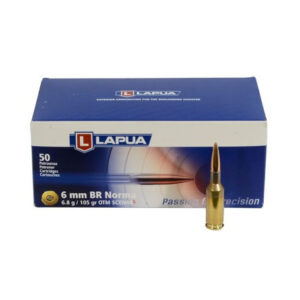
Buy 6mm BR Norma online from Ammo Plug. We deliver this precision benchrest and match cartridge renowned for exceptional accuracy, low recoil, efficient powder burn, and flat trajectories with 105-108 grain bullets. Ideal for benchrest competitions, 300-meter rifle events, PRS-style shooting, and varmint hunting, it offers velocities around 2800-2850 fps, very mild recoil for fast follow-ups, and extended barrel life. We ensure discreet worldwide packaging and delivery with no license required, fast 1-2 day overnight shipping in the USA and Canada (3-5 days international), multiple secure payment options like Bitcoin, Zelle, and bank transfer, full tracking, and our 30-day full refund or replacement guarantee for 100% customer satisfaction.
Price range: $850.00 through $3,800.00Select options This product has multiple variants. The options may be chosen on the product pageBuy .22 PPC online
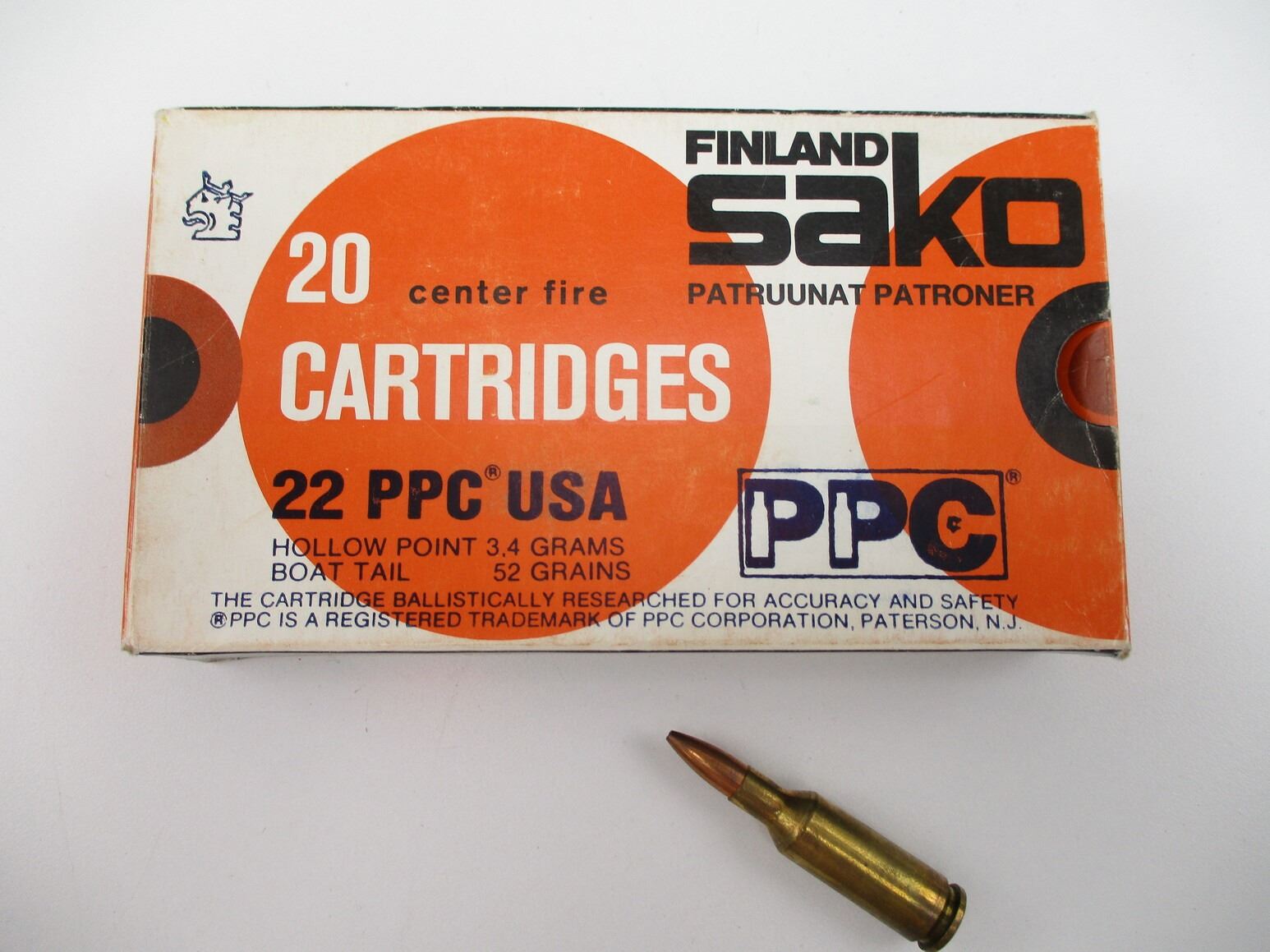
Buy .22 PPC online from Ammo Plug for reliable access to this legendary precision cartridge, renowned for outstanding benchrest accuracy, very low recoil, and excellent varmint performance. Developed in 1974 from the .220 Russian case, the .22 PPC delivers high velocities (often 3,300–3,400 fps with 50–52 grain bullets) and tight groups with minimal barrel wear. We offer discreet worldwide shipping with no license required, overnight delivery in the USA and Canada (1–2 days), international in 3–5 days, full tracking, and a 30-day refund or replacement guarantee. Pay securely via Bitcoin, bank transfer, Zelle, CashApp, or Western Union. Experience 100% customer satisfaction with every order of this specialized, high-performance .22 caliber ammunition.
Price range: $650.00 through $3,000.00Select options This product has multiple variants. The options may be chosen on the product page